
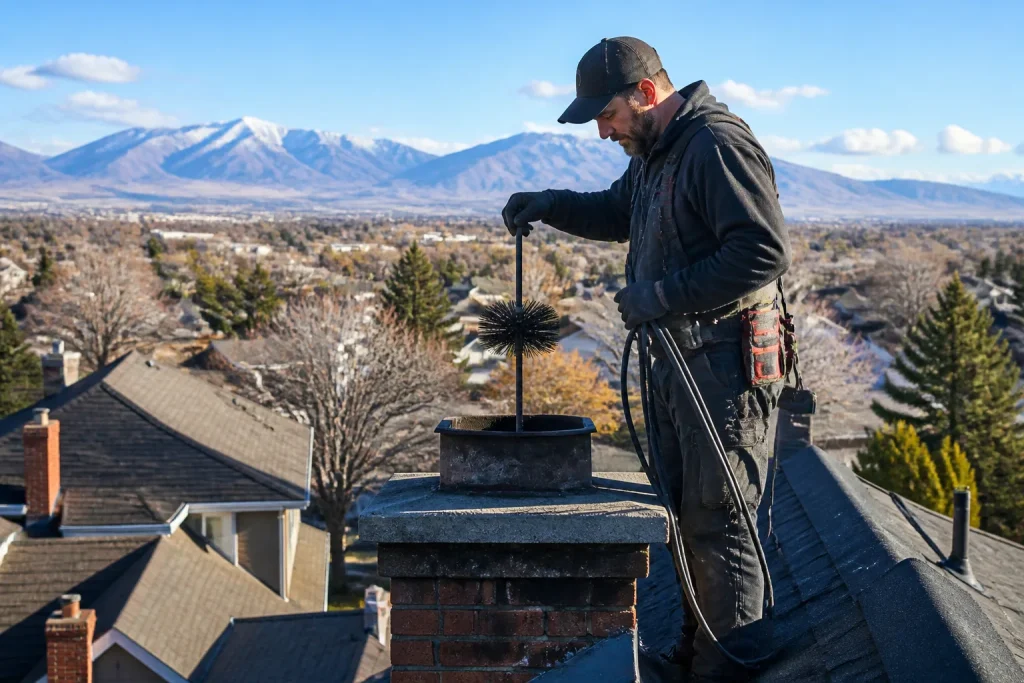
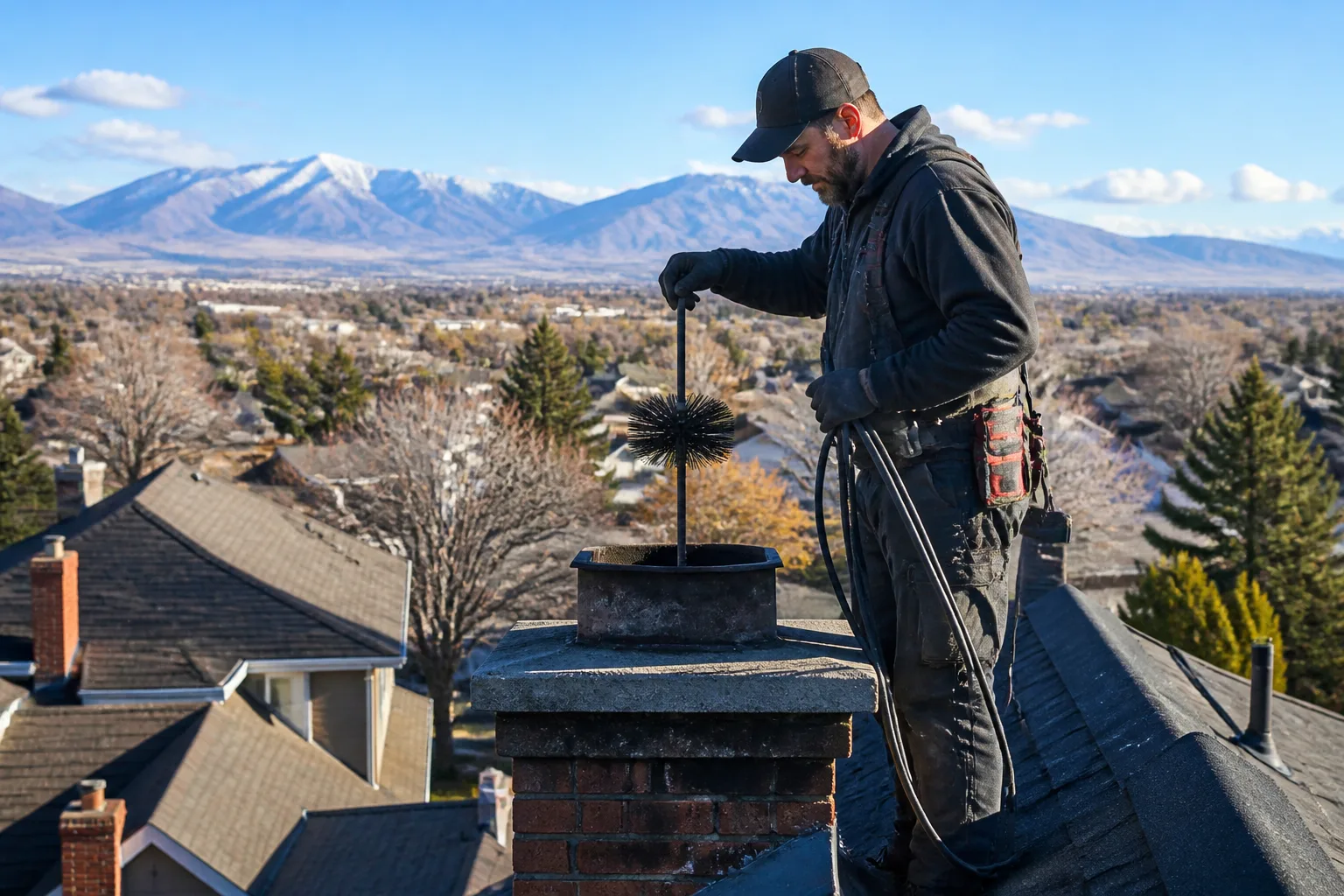
DuraFlex Chimney Sweep in West Valley City: A Homeowner’s Guide
Most homeowners hear “DuraFlex” and assume it’s just a brand name for flexible chimney liner – a generic shorthand for any corrugated stainless tube that slides down a flue. That assumption gets expensive. DuraFlex is a specific stainless steel alloy system with UL listings that determine whether the liner you’re quoted is actually appropriate for your appliance and your fuel. The difference between a 304 and a 316L alloy designation tells you more about a liner quote than the price at the bottom of the page.
If you’d rather have someone walk your flue and tell you straight, call (855) 629-7505. We answer 24/7. Fast dispatch from 7am to 7pm, Sunday through Friday.
Key Takeaways
- DuraFlex liners are stainless steel systems with UL 1777 listing, and alloy grade matters more than anything else on the quote.
- Wood appliances and wood stoves generally call for the heavier-duty alloy; gas and oil appliances have their own requirements.
- West Valley City’s older ranch homes often have offset flue runs that rigid liners can’t navigate, which is exactly where flexible systems earn their keep.
- Insulation wrap, a proper top plate, and a snug connector fitting are the marks of a real installation, not extras.
- Freeze-thaw cycles along the Wasatch Front put moisture stress on metal that a well-specified liner handles and a cheap one doesn’t.
What actually makes a DuraFlex liner different from a generic flexible liner?
A DuraFlex liner is a listed stainless steel chimney liner system, and the “listed” part is what separates it from a roll of corrugated tube your neighbor found at a hardware store. It carries a UL 1777 listing, which is the standard for chimney liners, and the alloy designation stamped into the product tells you what it’s built to resist. The two you’ll hear most often are 304 and 316L stainless.
Here’s the practical difference. A 304 grade is a general-purpose stainless that handles the conditions of certain gas and oil appliances reasonably well. A 316L grade adds molybdenum, which gives it more resistance to corrosion from the acidic condensate that wood and other fuels can produce. When a quote lands on your counter, the alloy is not a formality – it’s the spec that matches the liner to how you actually burn.
Wall thickness matters too. A liner’s gauge determines how much abuse it takes from sweeping brushes and how long it holds up against thermal cycling. In our experience around West Valley City, the winter freeze-thaw pattern along this stretch of the valley is hard on chimney systems. Metal expands and contracts with temperature swings, moisture finds its way in, and a thin or under-specified liner shows the wear first. A liner that’s been matched to the appliance and the climate lasts years longer than one chosen because it was in stock. That’s the conversation worth having before installation, not after.
Which DuraFlex variant fits your appliance?
Installing the wrong liner for the fuel type is the single most common under-specification we see. A liner rated for a gas insert is not automatically the right product for a wood stove, and an installer who treats them as interchangeable is cutting a corner. Match the product family to the appliance.
- Wood stoves and wood fireplaces: These need a liner spec’d for solid fuel and the higher temperatures and acidic condensate that come with it. This is where the heavier alloy designation earns its place.
- Gas inserts and gas appliances: Gas appliances produce condensate too, and the liner needs to handle it without corroding. A product spec’d for gas service keeps the flue sound.
- Oil appliances: Oil flues have their own condensation and residue profile. The liner needs to be specified for oil, not adapted from a wood application.
Ask for the product specification in writing. A reputable contractor will hand it over without blinking. When you can point to the listing and the alloy on paper, you know the liner in your West Valley City flue was chosen for your appliance, not pulled off a shelf because it was there.
What does a proper DuraFlex installation actually look like?
The quality of a liner job shows at the ends and at the connections, which is why it pays to know what a finished installation should include before the technician packs up. You don’t need to climb the roof to check. You need to know what to look for.
- Insulation wrap. The liner is typically wrapped in insulation before it goes down the flue. This reduces heat transfer to the masonry and helps the appliance draft properly. An unwrapped liner in a cold exterior chimney is a red flag.
- Top plate at the crown. A sealed top plate caps the flue at the roof line, keeping rain and debris from slipping around the liner. It should sit flush and be secured, not rattling.
- Connector fitting. At the appliance end, the connector should meet the flue collar tightly, with no gaps for smoke or carbon monoxide to escape into the room.
- Documentation. The installation should come with the inspection record and photos so you can see what was done inside a flue you’ll never look down yourself.
Schedule a chimney sweep after installation to confirm everything is drafting correctly. Insist on camera evidence of the finished work – you should be able to see what you paid for.
Why flexible liners suit West Valley City’s mid-century homes
West Valley City grew up fast in the middle of the twentieth century, and a lot of the housing stock reflects it: single-story ranch homes with straightforward rooflines and, often, chimneys that were built with an offset somewhere in the run. An offset is a jog in the flue where the chimney shifts position to clear a wall or align with the firebox. A rigid liner can’t make that turn without being cut and assembled in sections, which adds joints and weak points.
A flexible DuraFlex system slides down an offset flue in one continuous run, which is why it fits so many West Valley City homes that rigid systems fight. That flexibility isn’t a compromise on durability – a properly listed flexible liner performs to the same standard, just with a route that matches the geometry. If your home is one of the many older ranch houses where the chimney bends before it reaches the sky, a flexible liner is often the only sensible answer.
Weather plays its part too. Utah’s freeze-thaw cycles work on the masonry around the flue as much as the liner itself. A flexible liner paired with insulation wrap helps keep the flue interior warmer and drier through the cold months, which is good for the system and the structure around it.
How long should a DuraFlex liner last, and what voids the warranty?
A well-specified DuraFlex liner, properly installed and maintained, is built to give many years of service. The realistic lifespan depends on the alloy grade, the fuel you burn, how often the chimney is swept, and whether moisture gets around the liner. The warranty is where the sales conversation usually goes quiet, so it’s worth raising yourself.
What tends to void a liner warranty:
- Burning the wrong fuel. Burning trash, treated wood, or anything the appliance wasn’t designed for can overheat the liner and shorten its life. Some fuels also produce corrosive residue that eats into the alloy.
- Skipping the sweep. Creosote builds up on the liner interior and holds moisture against the metal. Regular sweeping is part of keeping the warranty valid.
- Water intrusion. A failed top plate or missing cap lets rain down around the liner.
- Improper installation. An unwrapped liner or a loose connector can void coverage, which is why the installation record matters.
We work with DuraFlex because it’s what professionals specify, and we handle chimney repair when a liner or crown needs attention. A few of our technicians have up to 14 years of experience reading flues, and they’ll tell you what they found and what it means.
When to call a pro
If you’re shopping an existing liner, notice smoke backing into the room, or smell a strong draft when the fireplace is cold, it’s time for an inspection. Some of that is a DIY-friendly check – a cap that rattled loose, a damper left open. Most of it isn’t. High-tension springs and cables and the interior of a flue are no place for a weekend project, and carbon monoxide doesn’t announce itself. Liner work belongs to a trained professional.
Related services in West Valley City: if you need a full inspection, cleaning, or liner replacement, our chimney repair and sweep services cover all three pillars – sweep, inspect, repair – so you’re not chasing a second contractor. Learn more about our Blackwell Chimney Sweep approach and the West Valley City area we serve.
The Bottom Line
DuraFlex is a specific stainless steel system with a UL 1777 listing, and the alloy grade on your quote is what matches the liner to your appliance and your fuel. West Valley City’s older ranch homes with offset flues are a natural fit for flexible systems, but only when the product is specified correctly and installed with insulation wrap, a sealed top plate, and a tight connector. Know what to look for, ask for the specification in writing, and keep a copy of the installation record.
If you’re in West Valley City and need help, Blackwell Chimney Sweep offers free estimates – call (855) 629-7505.
Frequently Asked Questions
It often is, especially if your chimney has an offset run that a rigid liner can’t navigate. The right answer depends on your appliance and fuel type – a wood stove and a gas insert call for different specifications. A proper inspection tells you which product fits your flue before anyone quotes a price.
316L contains molybdenum, which gives it more corrosion resistance against acidic condensate than 304. For solid-fuel appliances that produce harsher condensate, the heavier alloy is usually the appropriate choice. The grade should appear in the product specification you receive with the quote.
Most wood-burning systems should be swept before each heating season, and more often if you burn heavily. Regular sweeping removes creosote and keeps moisture off the liner, both of which protect the warranty. Call (855) 629-7505 for an exact quote – estimates are free.
No. Liner installation involves roof work, sealing at the top plate and connector, and confirming the appliance drafts correctly, with real carbon monoxide risk if a connection isn’t tight. This is work for a trained professional. We handle inspection, sweeping, and repair so you have one point of contact.
Written by the team at Blackwell Chimney Sweep.
Need Chimney Cleaning Help?
Call Blackwell Chimney Sweep - licensed & insured, with free written estimates in West Valley City.
(855) 629-7505